

What Is a Non-Recurring Setup Charge , and Why Is It on My Quote?
You’ve requested a quote for a precision machined composite part. The proposal comes back looking reasonable , until you notice an unfamiliar line item near the top: Non-Recurring Setup Charge, or NRE. Maybe it’s a few hundred dollars. Maybe it’s more. Either way, your first instinct is a reasonable one: What is this, and do I actually need to pay it?
It’s a fair question, and it deserves a straight answer. At Franklin Lamitex, we’ve been machining thermoset composite parts for over a century, and we believe our customers should understand every line on their quote. So, let’s break down exactly what a non-recurring setup charge is, why it exists, and why , over the life of your orders , it’s one of the best investments you’ll make.
What is a Non-Recurring Setup Charge?
A Non-Recurring Setup Charge , commonly abbreviated as NRE , is a one-time charge to design, fabricate, and qualify the fixture or tooling required to machine your specific part accurately and repeatably. The operative word is one-time. The NRE appears only on your first order. It does not reoccur on future orders for the same part.
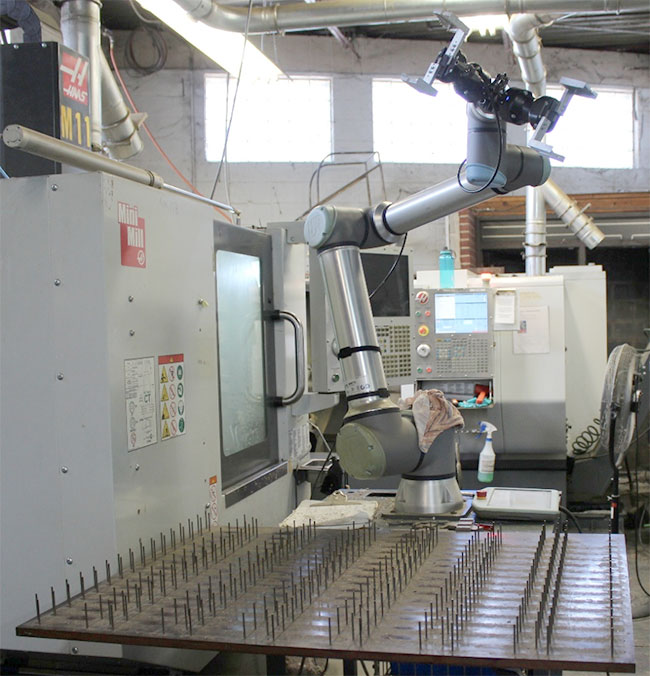
In practical terms, the NRE covers the labor and materials required to build a custom fixture: a precisely engineered holding device designed specifically for your part geometry. That fixture is then used every time your part runs on our CNC equipment, ensuring that each piece is held in exactly the same position, machined to exactly the same dimensions, and delivered to exactly the same standard. Once built, the fixture belongs to your job , and Franklin stores it for you.
Why Do Machined Composites Require a Fixture Charge?
This is the heart of the matter, and it’s worth spending a moment on the material science behind it because thermoset composites behave very differently from metals, and that difference is precisely why fixtures are not optional.
When a machinist works with steel or aluminum, the material is isotropic. Meaning it has the same properties in every direction , and it responds predictably to clamping forces. Thermoset composites like G10, G11, CE cotton phenolic, and glass-polyimide are a different story entirely. These materials are laminar by nature, built from layers of fabric or fiber reinforcement bonded together with a cured resin matrix. That layered structure gives them exceptional strength along certain axes , and vulnerability along others. Apply the wrong clamping force in the wrong place, and you risk delamination, surface fracture, or fiber pullout that ruins the part before the cutter ever touches it.
A well-designed machining fixture solves this problem by distributing clamping loads safely across the part geometry, protecting the fiber structure while holding the workpiece absolutely rigid. Rigidity is everything in precision CNC composite fabrication. Any movement, even a few thousandths of an inch,translates directly into dimensional variation in the finished part. When we’re holding tolerances of ±0.005” or tighter, there is no margin for a part that shifts in the vise.
Beyond dimensional accuracy, the fixture also protects the part’s surface condition. Thermoset composites are susceptible to surface damage from improper contact during machining. A fixture engineered for your specific part geometry cradles it correctly, preventing the kind of surface marking or edge chipping that can compromise a component’s function or its appearance on a customer’s inspection table.
The bottom line: without a proper fixture, consistent quality on a precision machined composite part is simply not achievable. The fixture is not overhead, it is the foundation of quality
Franklin Stores Your Fixture, and Uses it Every Time
Here is where the NRE charge stops being a cost and starts being an asset.
Once Franklin Lamitex builds and qualifies your fixture, we retain it in our facility. It is logged, stored, and tied to your part number. When you place a repeat order, whether that’s three months later or three years later, we pull your fixture from inventory, mount it on the machine, and run your parts. There is no additional setup charge. No re-engineering. No rework. Your fixture is ready, your job is ready, and your parts ship to the same specification they always have.
This has a tangible effect on your lead time as well. Jobs with existing fixtures move faster through our shop because the setup work is already done. That translates to shorter turnaround on repeat orders and a more predictable delivery schedule, which matters when you’re managing production timelines and inventory levels.
The most useful way to think about a non-recurring setup charge is as a one-time capital investment in your part’s production infrastructure, one that pays a return on every order that follows. If your NRE is $400 and you place four orders a year, that investment is fully recovered in the first order and delivers value on every one thereafter. The per-unit economics improve consistently as your order history grows.
Compare that to the alternative: a shop that re-fixtures every job, re-establishes every datum, and re-qualifies every part from scratch with each order. That approach might look cheaper on the first quote. But it introduces variability, extends lead times, and offers none of the repeatability that precision composite components demand. At Franklin, the NRE is how we ensure that your tenth order looks exactly like your first.
If you’ve received a quote from Franklin Fibre-Lamitex and have questions about any line item , including the NRE charge , we encourage you to call us. A real person will answer. Our customer service team is knowledgeable, responsive, and ready to walk you through your quote, explain your fixture requirements, and discuss your application in detail.
There are no automated phone systems here. No chatbots. No runaround. Just straightforward answers from people who know thermoset composite machining inside and out.
Phone:302-652-3621
Email: info@lamitex.com
Request a Quote: www.lamitex.com